

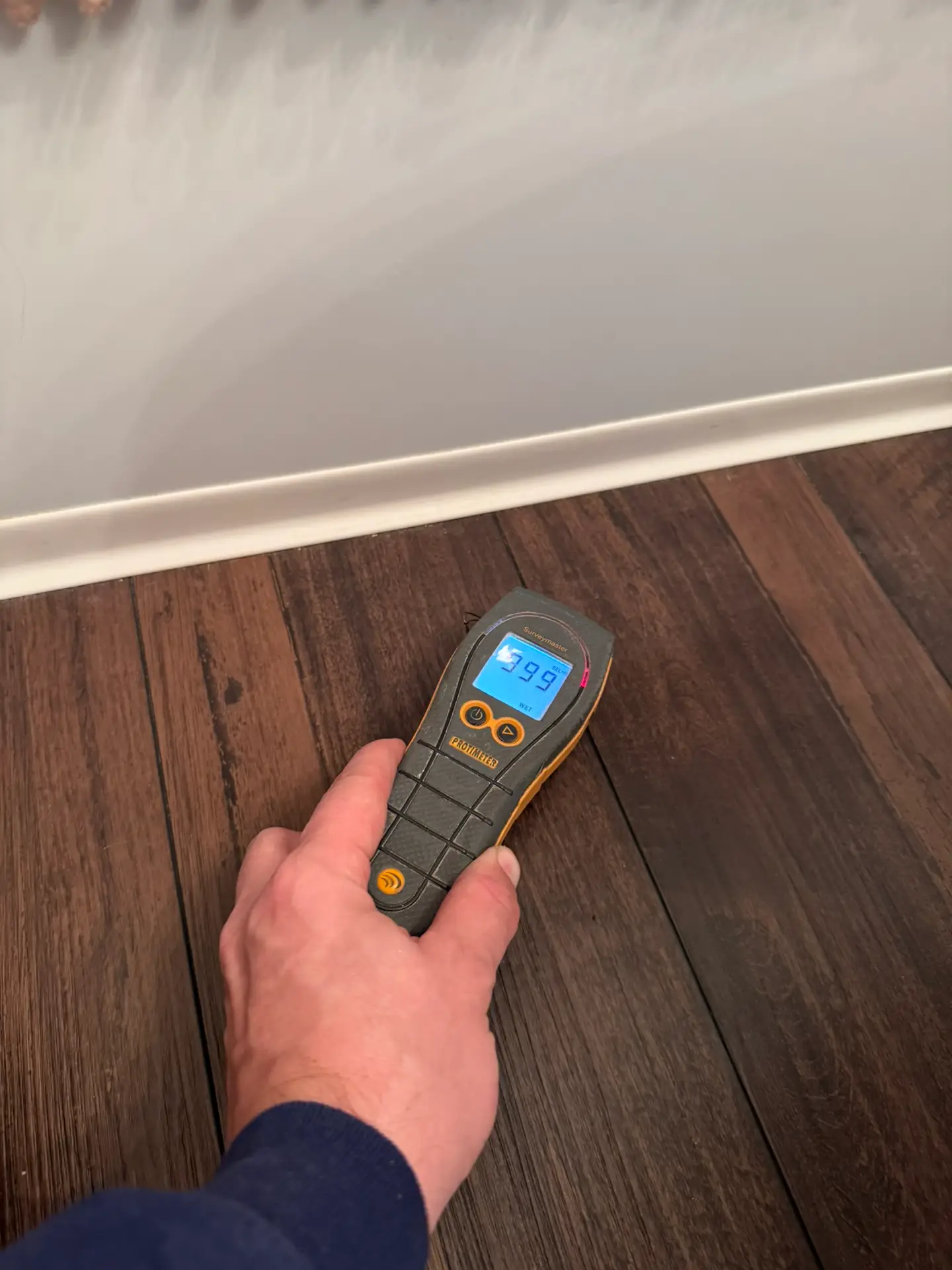
1. Flooring Starts Buckling, Cupping, or Lifting
One of the first things homeowners may notice is a change in the shape of the flooring.LVP or laminate can begin lifting at the seams. Hardwood may cup or move. Transitions can loosen. Certain areas may no longer sit flat like they did before the leak.These changes do not automatically mean the entire floor has to be replaced, but they are a good reason to investigate what is happening underneath.
2. The Floor Feels Different Underfoot
3. Baseboards Start Swelling or Pulling Away
4. There Is a Damp or Musty Smell
5. Damage Appears Away From the Original Leak
Water does not always stay next to the source.A dishwasher leak can travel beneath cabinets and flooring before becoming visible several feet away. A bathroom leak can move into a hallway or nearby bedroom.Because water follows paths through building materials and openings, the area that looks wet may not be the only area affected.This is why checking only the immediate leak location can sometimes miss part of the damage.
6. Cabinets or Toe Kicks Begin Swelling
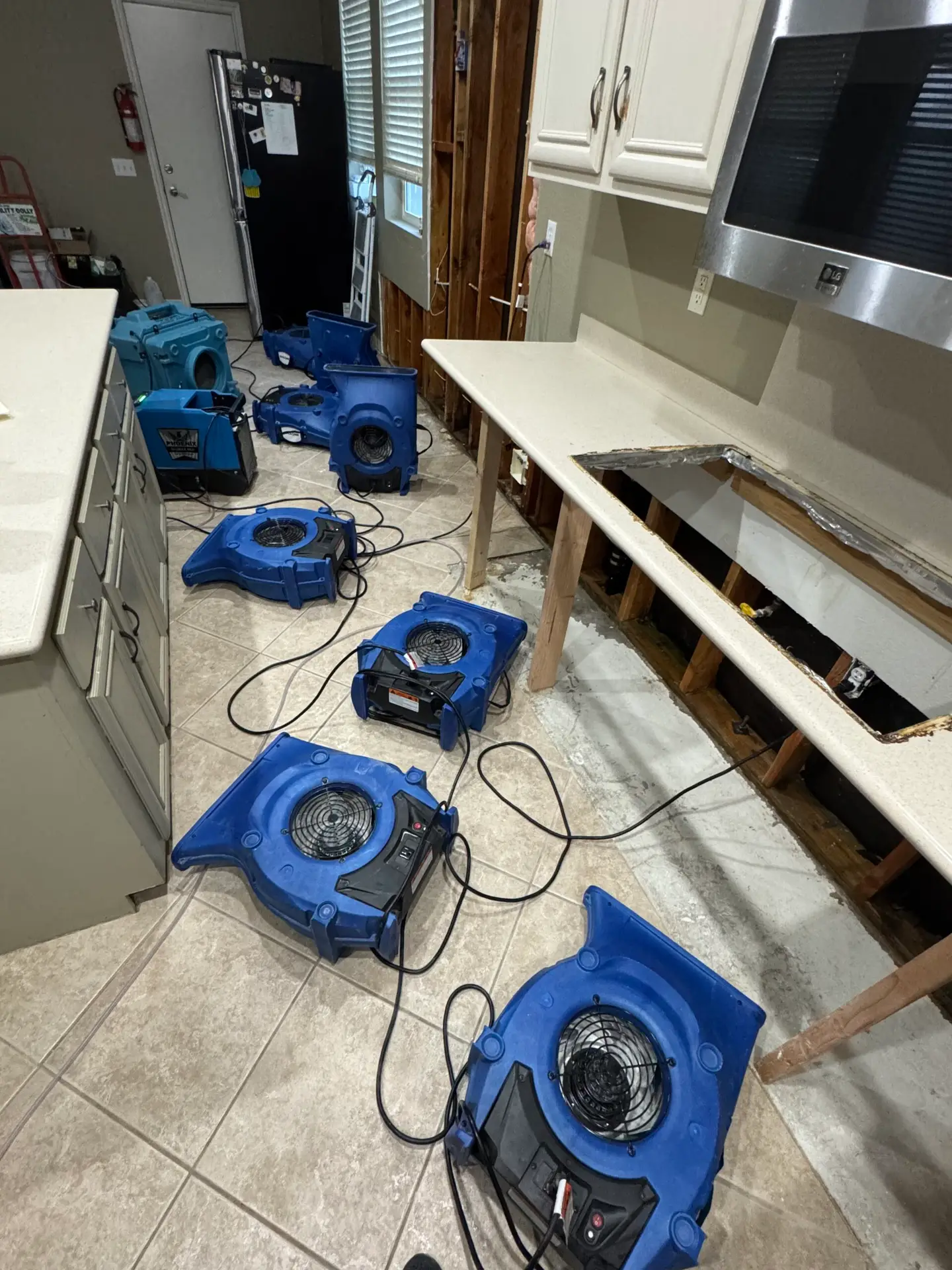
Kitchen leaks can be especially difficult to evaluate because water may move underneath cabinet boxes.Look at the toe kicks and lower edges of the cabinets for swelling, discoloration, separation, or softness.The condition of the cabinets matters too. Some materials may be able to remain in place, while others may be damaged enough that access or repair becomes necessary.The decision should be based on the actual material conditions rather than automatically removing everything.
7. The Floor Looks Dry, but Moisture Is Still Present
This is one of the most important things to understand after a water loss:Looking dry and being dry are not always the same thing.Moisture meters and other inspection methods can help identify materials that may still contain elevated moisture.The purpose is not to create unnecessary demolition. It is to understand what is actually wet and determine the appropriate way to address it.
Comments are closed